Memories attributed to composers and the stories behind pieces, with their sources. Each story shows how reliable its source is; read each one on its own page and listen to the piece.
Sheet music archive
Classical Turkish music works in real staff notation with AEÜ accidentals. Read the score, hear it with kanun sound, adjust the tempo.
Century
Works
No matching works found.
The archive only holds classical and sacred works whose composer and lyricist died more than 70 years ago; folk songs (türkü) and recent composers are not included for copyright reasons.
The level is estimated automatically from the score: range, notes per second, tempo, short and dotted values, the length and asymmetry (aksak) of the usul, the variety of perdes and the length of the piece are scored together. It is a guide, not a substitute for a teacher's judgement.
The archive only includes works by composers whose copyright has expired.
The level is estimated automatically from the score (range, speed, rhythm, usul, variety of perdes, length).
%75%100%125
♪♩♪Loading score…
Beat sound
Learn this piece
Work through the piece step by step: listen, slow down, get to know its usul and makam, follow the score and play it on a virtual instrument.
About this workThe story of the piece
The story linked to this piece, as told in the sources. The reliability of the source is shown above it; the sources are listed at the end of the page.
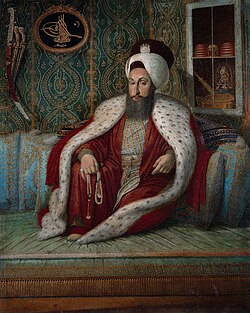
Scores of works by Selim III (1761–1808): 13 pieces in real notation with AEÜ accidentals, playable with kanun sound, plus recordings.
MakamMahur (2), Sûzidilârâ (2), Acemaşîrân (1), Buselik (1)FormŞarkı (7), Peşrev (3), Tavşanca (1), Saz semai (1)UsulAksak (4), Devr-i Kebir (2), Evfer (1), Devr-i hindi (1)Works as lyricist
In brief
Life
Born in 1761, he died in 1808; he reigned as sultan from 1789 to 1807. He was a composer who played the tanbur and the ney and used the pen name 'İlhâmî'; he learned from Tanbûrî İzak and Hacı Sâdullah Ağa. He created new makams, above all Suzidilara, and reorganized the meşkhane (music school) in the Enderun. He was attached to the Mevlevî order; a musical circle named after him took shape.[1]
Contributions to music theory
Memories
Memories attributed to him and told in the sources. The reliability of the source is shown above each one; the sources are listed at the end of the page.
Documented
The reopening of the Galata Mevlevi lodge
Şeyh Gâlib attached a kaside to his petition for the restoration of the Galata Mevlevi lodge; Selim III liked the poem so much that he had the restoration begun at once. The sultan attended the reopening on a Friday, and at the mukabele his own sûzidilârâ âyin was performed. Selim III is said to have devised and arranged makam sûzidilârâ.[2]
III. Mustafa fatherMihrişah Sultan motherHüsnümah Kadın spouseNuruşems Kadın spouseRefet Kadın spouseSafizar Kadın spouseTabısafa Kadın spouseZibifer Kadın spouseEmine Sultan siblingHatice Sultan sibling
The level is estimated automatically from the score: range, notes per second, tempo, short and dotted values, the length and asymmetry (aksak) of the usul, the variety of perdes and the length of the piece are scored together. It is a guide, not a substitute for a teacher's judgement.
Collections
Usuls without works in the archive
No works in these usuls are in the score archive yet; you can hear their düm-tek patterns in the usul metronome.