Memories attributed to composers and the stories behind pieces, with their sources. Each story shows how reliable its source is; read each one on its own page and listen to the piece.
Sheet music archive
Classical Turkish music works in real staff notation with AEÜ accidentals. Read the score, hear it with kanun sound, adjust the tempo.
Century
Works
No matching works found.
The archive only holds classical and sacred works whose composer and lyricist died more than 70 years ago; folk songs (türkü) and recent composers are not included for copyright reasons.
The level is estimated automatically from the score: range, notes per second, tempo, short and dotted values, the length and asymmetry (aksak) of the usul, the variety of perdes and the length of the piece are scored together. It is a guide, not a substitute for a teacher's judgement.
The archive only includes works by composers whose copyright has expired.
The level is estimated automatically from the score (range, speed, rhythm, usul, variety of perdes, length).
%75%100%125
♪♩♪Loading score…
Beat sound
Learn this piece
Work through the piece step by step: listen, slow down, get to know its usul and makam, follow the score and play it on a virtual instrument.
About this workThe story of the piece
The story linked to this piece, as told in the sources. The reliability of the source is shown above it; the sources are listed at the end of the page.
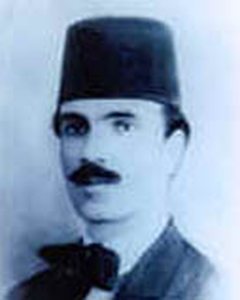
Scores of works by Udi Bestekar Ahmet Sedat Öztoprak (1890–1947): 1 pieces in real notation with AEÜ accidentals, playable with kanun sound, plus recordings.
MakamEviç (1)FormSaz semai (1)UsulAksak Semai (1)
In brief
Life
Born in 1890 in Konya; his father was Hüseyin Şakir Bey, president of the high criminal court. He received his first music lessons from Abdi Dede, one of the dervishes of the Konya Mevlevîhane, and learned the ud largely through his own efforts, reaching virtuoso level. In Istanbul he taught the ud for a time at the Darülelhan. He composed peşrevs, saz semais, longas, sirtos, oyun havası (dance tunes) and şarkıs; one of his students was Vecihe Daryal. He died in 1947 at the Darülaceze (almshouse).[1, 2]
Contributions to music theory
Memories
Memories attributed to him and told in the sources. The reliability of the source is shown above each one; the sources are listed at the end of the page.
The level is estimated automatically from the score: range, notes per second, tempo, short and dotted values, the length and asymmetry (aksak) of the usul, the variety of perdes and the length of the piece are scored together. It is a guide, not a substitute for a teacher's judgement.
Collections
Usuls without works in the archive
No works in these usuls are in the score archive yet; you can hear their düm-tek patterns in the usul metronome.